What are the typical requirements for second chance housing?

Second chance housing is not “no requirements.” It’s usually “same screening categories, different thresholds.” Translation: you may still get checked — you just might get approved with conditions.
If you’re tired of paying application fees just to get told “no,” this guide is built to help you apply smarter.
Light disclaimer: housing rules vary by state, city, and property. This is general info, not legal advice.
The short answer: typical requirements at-a-glance
Here’s what most landlords (and many second chance programs) still care about:
| Category | What’s typically checked | What “second chance” often changes |
|---|---|---|
| Identity | Government identification (ID), basic info match | Usually no change — still required |
| Income | Verifiable income, stability, rent-to-income ratio | More flexibility if income is strong |
| Rental history | Evictions, broken leases, landlord debt | “Older” issues may be accepted w/ conditions |
| Credit | Score, collections, unpaid housing debt | Lower score may be okay with deposit/guarantor |
| Background | Criminal background check results | Varies wildly by property and local rules |
| Upfront money | Deposit, fees, sometimes first month rent | Higher deposit or deposit alternatives are common |
Income & affordability (the #1 gatekeeper)
Even in second chance situations, income is usually the biggest “yes/no” switch.
What’s typical
Many properties look for steady, verifiable income and may use a rule-of-thumb like ~3× monthly rent (not universal, but common).
You’ll often need recent pay stubs, an offer letter, bank statements, or benefit letters.
What usually counts as “verifiable”
W-2 (Wage and Tax Statement) employment pay stubs
Self-employment (usually bank statements + tax returns)
Government benefits documentation (varies)
Consistent deposits that match stated income (some properties)
If you’re short on income, realistic options
Smaller unit / different neighborhood / different property type
Room rental or shared housing model (some options are built for this) New SCL PDF
A guarantor (co-signer) service that backs the lease (fee-based) New SCL PDF
Soft CTA (mid-post): If you want a shortcut, the fastest method is usually calling 5–10 second chance-friendly contacts first, confirming requirements upfront, then applying only where you’re a fit. That’s exactly what a curated list is for. (More on that near the end.)
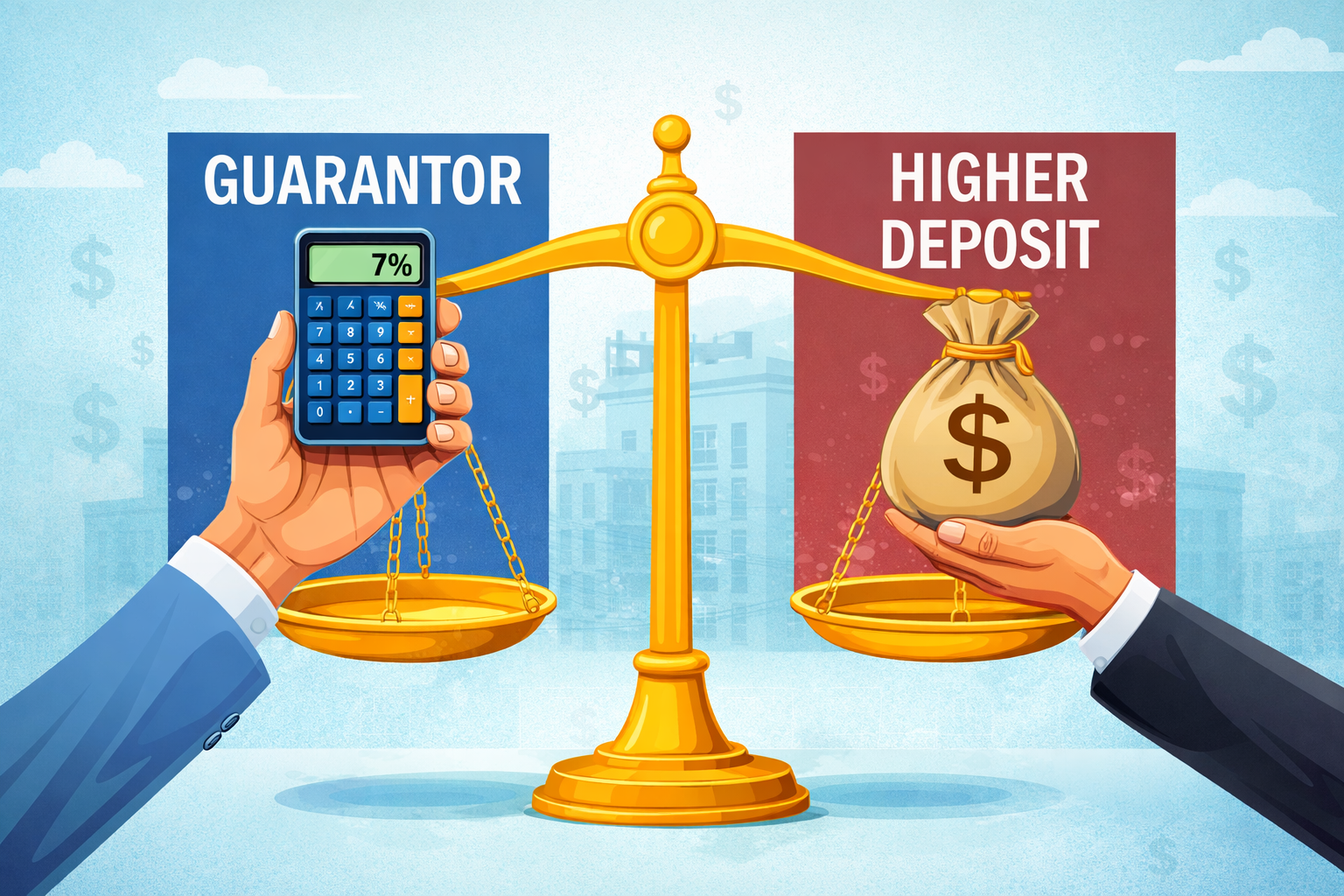
Guarantor vs. Higher Deposit Break-Even Calculator (Free Tool)
Use this to compare the expected cost of paying a higher deposit vs paying a guarantor fee. (This ignores your standard security deposit because that’s usually required either way.)
Rental history (evictions, broken leases, landlord debt)
Rental history is where most people get stuck because it’s not just the eviction — it’s the pattern.
What landlords commonly look at
Prior evictions, especially recent ones
Unpaid balances owed to former landlords
Broken lease history
Repeated late payments
“How far back” can it show?
Consumer guidance commonly points to the Fair Credit Reporting Act (FCRA) time limits (often 7 years for many public record negatives), with no time limit for criminal convictions in many cases.
What usually improves your odds
Paid or settled housing-related debt (when possible)
Proof you’ve had stable housing since (even if informal)
A short, factual explanation you can repeat consistently
No drama. No essay. Just facts + receipts.
Credit & screening reports (what’s fair game)
Most landlords don’t treat credit like a moral score. They treat it like a risk signal.
Typical credit-related requirements
Some places want a minimum score; others care more about:
Housing-related collections
Recent delinquencies
Total debt load
Your most underrated move: check the report before they do
Errors happen — and the Consumer Financial Protection Bureau (CFPB) has warned that tenant background checks can contain errors that block housing.
If you’re denied because of a tenant screening report, you can dispute inaccurate or outdated info — the Consumer Financial Protection Bureau says the company generally investigates within about 30 days (sometimes 45).
Practical play: don’t “argue” with a leasing agent. Dispute with the reporting company and bring the corrected proof back.
Criminal background checks (this varies the most)
This category has the biggest property-by-property differences.
What’s typical
Many properties screen for criminal history, but:
The lookback window
The types of offenses considered
The weighting
The appeal process
…all vary.
What to ask before paying an application fee
“Do you have a written screening policy I can review?”
“Are there any automatic disqualifiers I should know about?”
“If I’m conditionally approved, what are the usual conditions — deposit, guarantor, etc.?”
(You’re not asking for special treatment — you’re asking to avoid wasting money.)
Second chance-specific requirements (what’s different)
This is where second chance housing usually “shows itself.”
1) Higher deposit (sometimes double)
It’s common to see:
Standard deposit
Double deposit
Or a structured condition (deposit + proof of stability)
Example: some listed second chance-friendly operators specify a credit score minimum, and if below that, they may require a larger deposit and second chance program involvement. New SCL PDF
2) Guarantor (co-signer) services
Instead of denying you, some properties accept a lease guarantee / co-signing program (fee-based). New SCL PDF
3) More documentation (not more “excuses”)
Second chance approvals often depend on documentation:
Proof of income
Proof of funds for move-in
Proof of resolved past balances (if applicable)
Free tool: Second Chance Housing Requirements Readiness Checker (embed)
This is a simple, paste-and-go mini-tool you can embed on your blog page.
Second Chance Housing Requirements Checker (Free Tool)
Enter your basics to estimate what most second-chance pathways will likely ask for (deposit, documents, and next steps).
Show suggested document checklist
Document checklist + a clean 7-day game plan
What to gather in 30–60 minutes
Government identification (ID)
2–4 recent pay stubs (or offer letter)
Bank statement (last month)
A short “rental history note” (dates + addresses + landlord contact if you have it)
What to gather in 24–48 hours (if needed)
Proof of paid/settled housing debt
Reference letter from employer
Proof of savings for move-in costs
Guarantor (co-signer) pre-approval (if you go that route) New SCL PDF
7-day plan (simple, effective)
Make a list of 10–20 properties.
Use the tool above to screen yourself.
Call/email to confirm screening policy before applying (save money).
Apply to your top 3–5 best-fit properties first.
If denied due to a report, dispute errors immediately (don’t argue — document).
Scripts you can copy/paste
Email to a leasing office (fast + professional)
Subject: Screening requirements question before I apply
Message: (use the tool’s “Copy leasing message” button)
Phone script (20 seconds)
“Hi — quick question before I apply. Do you have a written screening policy? Any automatic disqualifiers? And do you allow conditional approvals like higher deposit or a guarantor program?”
Dispute script (if a report is wrong)
“I’m disputing inaccurate/outdated information in my tenant screening report. Please investigate and correct it, and send me an updated copy.”
(Consumer Financial Protection Bureau and Federal Trade Commission guidance supports disputing inaccurate or outdated tenant screening data.)
Common mistakes that waste time and money
Applying first, asking questions later → you burn application fees (average is often around $50 per adult).
Not reviewing your own screening history → errors can block housing.
Oversharing your life story → keep it factual + documented.
Falling for “guaranteed approval” without terms in writing → always verify refund terms, what’s included, and who actually makes the approval decision.
Where to find second chance-friendly options (without guessing)
You can search the big rental platforms, but the real efficiency move is pairing your shortlist with second chance-friendly contacts/programs.
A practical workflow used by Second Chance List materials looks like:
Pick 3 properties you want, then
Choose one second chance program / corporate guarantor option to work your case and contact them with your list. New SCL PDF
If you want the shortcut (so you’re not cold-calling random properties), grab the list here:
https://www.secondchancelist.com/shop/p/second-chance-master-list
Stronger CTA: If your time matters, stop paying “maybe” fees. Get the contacts, confirm requirements first, and apply where you actually have a path to “yes.”
Frequently asked questions (FAQ)
Do second chance apartments still do credit checks?
Often, yes. The difference is they may approve with conditions (deposit/guarantor) instead of auto-denying.What income do I need?
Many properties want verifiable income and may use a common rule-of-thumb like ~3× rent, but it varies.How long does an eviction stay on record?
Many negative items are generally limited to about 7 years under the Fair Credit Reporting Act; bankruptcies can be up to 10 years.Can I fix errors on a tenant screening report?
Yes. You can dispute inaccurate/outdated data; investigation is typically ~30 days (sometimes 45).Will I always need a higher deposit?
Not always — but it’s common when credit/rental history is weak or recent issues exist. New SCL PDFDo guarantor programs help?
They can — especially when income is solid but credit/rental history is the problem. Terms vary. New SCL PDFShould I apply to multiple places at once?
Only after you confirm screening requirements. Otherwise, you’ll stack fees fast.What’s the fastest way to avoid wasted application fees?
Ask screening policy questions first + use a readiness checklist/tool before you apply.
Sources (publisher • title • date)
Consumer Financial Protection Bureau (CFPB) • What should I do if my rental application is denied because of a tenant screening report? • Oct 30, 2025.
Federal Trade Commission (FTC) • Tenant Background Checks and Your Rights • (page updated 2024).
Consumer Financial Protection Bureau (CFPB) • How long can eviction actions and lawsuits stay on my tenant screening record? • Jul 1, 2021.
Georgetown Law (poverty journal) • The Case Against Rental Application Fees • 2022.
U.S. Department of Housing and Urban Development (HUD) User • HOME Rent Limits • (current page).
Second Chance List • Learn More • Jan 3, 2026.
Second Chance List internal materials • Second chance programs + workflow directions (select properties, contact program) • (PDF). New SCL PDF
Second Chance List internal site reference • (PDF). second chance list website